In Perth’s older properties, particularly those constructed before 1990, asbestos was extensively used in various building materials and components due to its fire resistance, durability, and insulation properties. Common areas where builders and renovation contractors encounter asbestos include:
- Wall cladding: Asbestos cement sheeting was widely used as internal and external wall cladding in Perth homes and commercial properties for its strength and weather resistance.
- Flooring: Vinyl floor tiles, sheet vinyl, and underlay containing asbestos remain common in properties built before the mid-1980s.
- Ceiling materials: Textured ceiling coatings and popcorn ceilings in many older Australian homes may contain asbestos fibres.
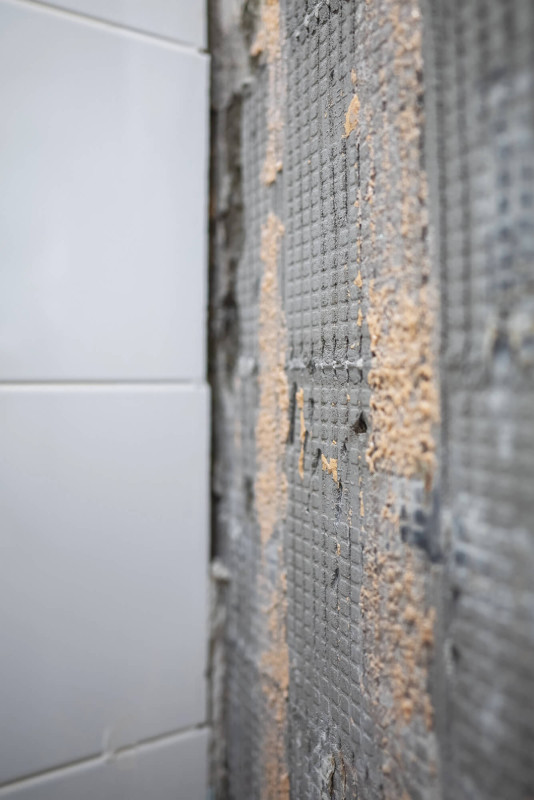
- Bathroom and kitchen surfaces: Asbestos cement sheeting was frequently used behind tiles and as splashbacks in wet areas during bathroom remodel and kitchen renovation projects.
- Eaves and soffits: Asbestos cement eaves and soffit materials are prevalent throughout Perth’s pre-1990s housing stock.
- Fencing: Asbestos cement fencing remains widespread across Perth properties and requires careful handling during demolition or replacement.
- Insulation: Certain pipe lagging and insulation materials applied in older buildings may contain asbestos fibres.
- Roofing: Asbestos is often found in roof sheeting and corrugated panels, especially as older buildings are being renovated.
Identifying and safely managing asbestos during building and renovation work is essential to protect your team, subcontractors, and property occupants, and to comply with WHS legislation.
If asbestos-containing materials are damaged or disturbed during demolition, bathroom renovation, kitchen remodel, or extension work, strict safety protocols must be followed to prevent the release of hazardous asbestos fibres into the air.