In Perth’s older sporting facilities, particularly those built before 1990, asbestos was commonly incorporated into various building materials because of its durability, fire resistance, and cost-effectiveness. Common areas where sporting clubs encounter asbestos include:
- Changerooms and sporting rooms: Wall cladding, partitions, and ceiling panels in soccer rooms, football changerooms, and locker areas often contain asbestos cement materials.
- Clubhouse walls and eaves: Asbestos cement sheets were standard cladding materials for club buildings, storage sheds, and canteen facilities.
- Ceiling materials: Textured coatings and ceiling tiles in social areas, function rooms, and meeting spaces may contain asbestos fibres.
- Floor tiles: Vinyl floor tiles and sheet flooring in amenities, corridors, and wet areas frequently contain asbestos backing.
- Bathroom and wet areas: Shower screens, wall panels, and waterproofing materials in bathrooms and pool facilities may include asbestos products.
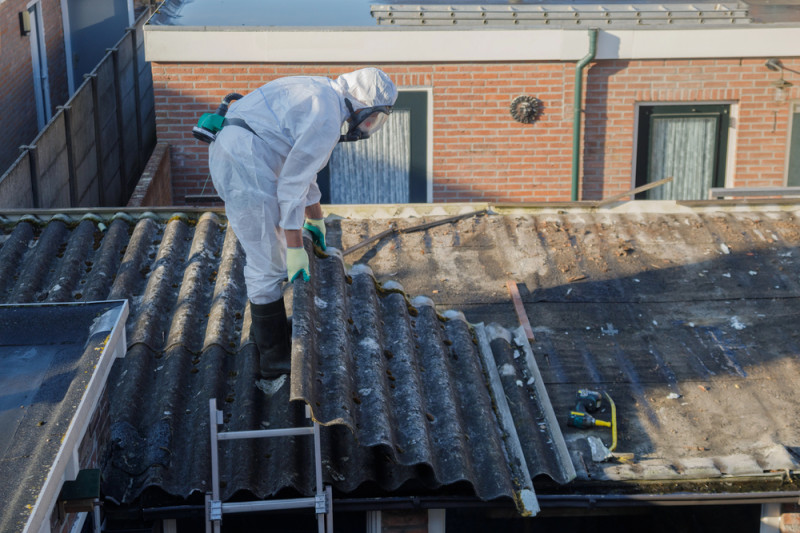
- Roof sheeting: Corrugated asbestos cement roofing remains prevalent across older club buildings and equipment storage areas.
- Fencing: Boundary fencing around sporting grounds, clubhouses, and amenities may be constructed from corrugated or flat asbestos cement sheets, often partially buried. Older fencing can deteriorate over time or be affected during upgrades, landscaping or replacement works, making professional assessment important before it is disturbed.
- Insulation materials: Pipe lagging and thermal insulation around heating systems and hot water services may contain asbestos. Some insulation products, including certain pipe lagging, can be friable. We can inspect suspected materials, arrange asbestos sampling and NATA-accredited laboratory testing, and help determine the appropriate next step. Where the material is bonded and non-friable, we can complete the removal under our Class B licence.
Identifying and safely managing asbestos during facility upgrades, maintenance work, or renovation projects is essential to protect club members, volunteers, and the wider community whilst complying with WHS legislation.
If asbestos-containing materials are damaged or disturbed during facility improvements, equipment installation, or building modifications, appropriate safety protocols must be followed to prevent the release of dangerous asbestos fibres into the air.