Updated August 27, 2026
Article highlights
- Asbestos was widely used in Australian homes throughout the 20th century.
- Most asbestos building products in WA were phased out by the mid to late 1980s.
- Australia introduced a complete ban on asbestos importation and use on 31 December 2003.
- Homes built before 1990 are more likely to contain asbestos-containing materials.
- Common locations include walls, roofs, eaves, fencing, flooring and wet areas.
- Professional identification, testing and licensed removal help reduce the risk of exposure.
Understanding when asbestos stopped being used in homes is important if you own, buy or renovate an older property. While Australia introduced a complete national ban on asbestos on 31 December 2003, asbestos use in Western Australian building products had largely ended much earlier.
In this article, we explain when asbestos use declined in Australian homes, why older properties may still contain asbestos, where to look for asbestos-containing materials and what to do if you find it, including the process of residential asbestos removal.
Require asbestos inspection, testing, or removal from your home? Get in touch with Rapid Asbestos Removals for a quote today!
The historical use of asbestos in home construction
Asbestos was once widely used in home construction because of its strength, durability and resistance to heat, fire, chemicals and moisture. The use of asbestos in homes can be traced back to the early 20th century, peaking between the 1940s and 1970s. In Australia, asbestos became particularly widespread after World War II, with building products such as asbestos cement sheeting, roofing, fencing and other materials used extensively in residential construction.
Asbestos building products were particularly common in WA. Asbestos cement products were manufactured in Western Australia from 1921 to 1987, while chrysotile asbestos continued to be used in some products until the national ban in 2003. Homes built during this period are more likely to contain asbestos materials, making it crucial for homeowners to understand the potential presence of asbestos-containing products in older properties.
Older homes may contain asbestos in:
- Fencing
- Roofing and roof products
- Walls and eaves
- Ceiling panels
- Flooring and vinyl tiles
- Bathrooms, laundries and other wet areas
- Pipes and pipe insulation
- Electrical components
- Some insulation and other building products
When did asbestos stop being used in Australian homes?
There isn’t one date when asbestos suddenly disappeared from Australian homes.
In Western Australia, asbestos was used extensively in building products until the 1980s. Crocidolite and amosite were subject to bans from 1985, while the use of asbestos in building and construction materials had declined significantly by the late 1980s.
The Department of Water and Environmental Regulation uses 1990 as a practical reference point when assessing the likelihood of asbestos in buildings. Its guidance states that buildings constructed before the mid-1980s are highly likely to contain asbestos, buildings from the mid-1980s to 1990 are quite likely to contain asbestos, and buildings constructed after 1990 are unlikely to contain asbestos.
Australia’s comprehensive national ban took effect on 31 December 2003, prohibiting the importation, manufacture and use of all forms of asbestos, subject to limited exceptions. This means asbestos-containing materials already installed in homes before the ban can still remain in place today.
Health concerns and asbestos exposure awareness
The dangers of asbestos exposure were not initially recognised. However, as early as the 1920s, some medical professionals began to link asbestos to severe respiratory illnesses. Despite these early warnings, it wasn’t until the latter half of the 20th century that the full extent of asbestos-related health risks became widely acknowledged.
Exposure to asbestos fibres can lead to serious health conditions, including asbestosis, lung cancer, and mesothelioma. These illnesses often develop decades after initial exposure, making early detection and prevention challenging. Public awareness of these health risks grew significantly in the 1960s and 1970s, spurred by scientific research and high-profile legal cases involving asbestos-related diseases.
The risk generally arises when asbestos-containing materials are damaged, deteriorated or disturbed. Renovation, demolition, drilling, cutting, sanding and other work can release fibres into the air. HealthyWA specifically warns homeowners to take care when working on houses built before 1990 because these properties are likely to contain a range of asbestos materials.
This makes asbestos identification particularly important before starting renovation work. Materials that look like ordinary cement sheeting, flooring or other building products cannot always be identified as asbestos by appearance alone.
If you’re unsure whether a building material contains asbestos, don’t rely on appearance alone. Our team can inspect suspected materials, arrange NATA-accredited laboratory testing and help you understand the safest next step for your property.
Arrange asbestos testing with Rapid Asbestos Removals
Regulatory actions and bans
The growing body of evidence linking asbestos to severe health problems led to increased regulatory scrutiny. Governments around the world began to implement measures to control the use of asbestos and protect public health.
In Australia, the use of asbestos in building materials was progressively restricted through a series of regulatory actions. By the 1980s, the dangers were well-documented, and the government took decisive steps to phase out asbestos. The importation and use of all forms of asbestos were eventually banned in Australia on 31 December 2003. This comprehensive ban marked the end of asbestos use in new home construction and other applications within the country.
Identifying and removing asbestos in existing homes
If your home was built before 1990, there is a reasonable chance that some building materials contain asbestos. However, the age of a property alone cannot confirm whether a particular material contains asbestos.
A building inspection also may not identify every asbestos-containing material. Asbestos can remain concealed or inaccessible, particularly where a survey has not involved invasive investigation.
If you suspect a material contains asbestos:
- Don’t cut, drill, sand or break it.
- Keep people and pets away from the area.
- Don’t pressure wash suspected asbestos cement.
- Arrange professional asbestos testing where identification is required.
- Use a licensed asbestos removalist when professional removal is required.
Attempting to remove asbestos without proper training and equipment may release asbestos fibres and lead to dangerous exposure and asbestos contamination.
Rapid Asbestos Removals can inspect suspected asbestos materials, arrange sample testing through NATA-accredited laboratory facilities and safely remove non-friable asbestos from residential properties.
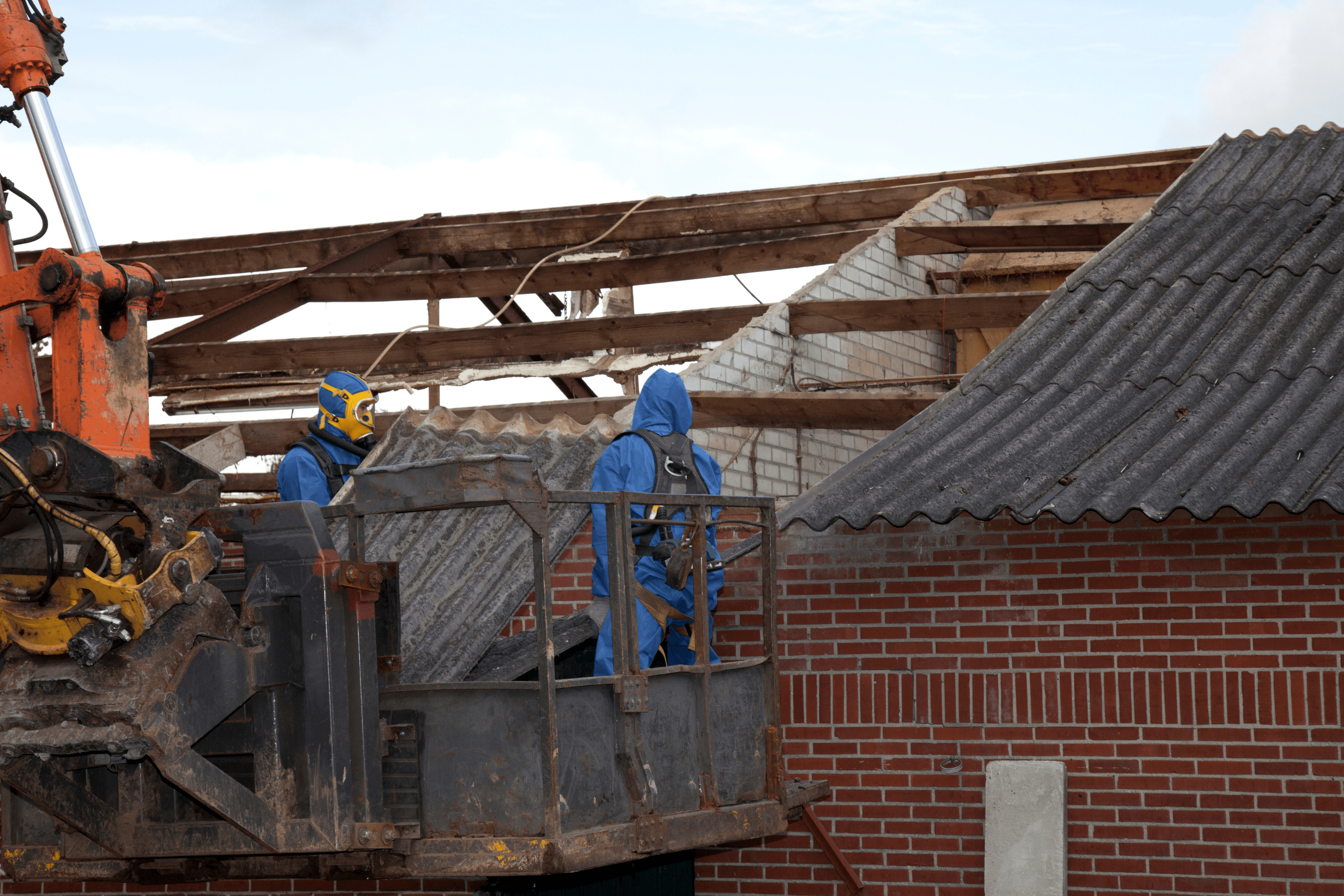
Steps in professional asbestos removal
Professional asbestos removal generally involves several stages, depending on the material, its condition and the requirements of the project.
- Inspection and testing: Suspected materials are assessed and, where required, samples are collected for laboratory analysis to confirm whether asbestos is present.
- Planning and preparation: The removal area is assessed and appropriate controls are established to prevent the spread of asbestos fibres.
- Containment: Where required, the work area is isolated and appropriate containment measures are implemented.
- Removal: Asbestos-containing materials are carefully removed using procedures designed to minimise fibre release.
- Disposal: Asbestos waste is packaged, transported and disposed of at an appropriate licensed facility.
- Decontamination and clearance: The work area is cleaned and, where required, independent asbestos assessors or hygienists can be coordinated for clearance inspections and air monitoring.
Rapid Asbestos Removals holds a Class B Asbestos Removal Licence (WR2032) and specialises in the removal of non-friable asbestos. For projects requiring independent air monitoring or clearance after removal, Rapid coordinates the appropriate licensed asbestos assessor or hygienist.
For professional asbestos removal services, get in touch with us at Rapid Asbestos Removals. We can help with all non-friable asbestos removal, whether it’s a residential or commercial building.
Transition to asbestos-free building materials
As asbestos use declined, manufacturers increasingly adopted alternative materials for construction and insulation. Builders and manufacturers began to explore safer, non-toxic options that could provide similar benefits without the associated health risks.
As the construction industry continues to evolve, the focus on safety and sustainability has led to the development of innovative materials that replace asbestos. These alternatives offer comparable performance and contribute to more environmentally-friendly building practices.
Some popular asbestos alternatives include:
- Fibreglass insulation: Lightweight and non-flammable, fibreglass is an effective and safe insulation material.
- Cellulose insulation: Made from recycled paper products, cellulose is an eco-friendly option that provides excellent thermal performance.
- Fibre cement: Used for roofing and siding, fibre cement is durable, fire-resistant, and versatile.
- Polyurethane foam: Used for insulation, this foam offers superior energy efficiency and is free from asbestos-related hazards.
Get in touch with Rapid Asbestos Removals
Understanding the age and construction history of your home can help you identify where asbestos may be present, but property age alone cannot confirm whether a particular material contains asbestos.
If you’re planning renovations or have found damaged or suspicious building materials, check existing materials before removing or disturbing them rather than assuming that newer materials have replaced everything containing asbestos. Rapid Asbestos Removals can help with asbestos inspection, sample testing and non-friable asbestos removal across Perth and WA.
Don’t risk disturbing a material you’re unsure about. Contact Rapid Asbestos Removals to arrange asbestos testing or removal.
Frequently asked questions
There wasn't one date when asbestos use stopped in Australian homes. In Western Australia, asbestos was widely used in building products until the 1980s and had largely ceased in building and construction materials by the late 1980s.
Australia introduced a comprehensive national ban on the importation and use of all forms of asbestos on 31 December 2003. Asbestos materials installed before the ban can still remain in older homes today.
Asbestos may be found in a wide range of older building materials, including walls, eaves, roofing, fencing, ceilings, flooring and wet-area sheeting. It may also occur in vinyl floor tiles, pipe products, insulation and some electrical components. Asbestos can sometimes be concealed beneath later renovations, so a visual inspection alone cannot reliably confirm that a material is asbestos-free.
You generally cannot confirm asbestos by looking at a material. Some asbestos products have distinctive characteristics, but these aren't enough to provide certainty. Suspected materials can be sampled and analysed by a laboratory accredited for asbestos testing. If you're renovating an older property, arrange appropriate identification and testing before disturbing materials that could contain asbestos.
WA rules allow homeowners to remove small amounts of intact non-friable asbestos in certain circumstances, but strict safety requirements apply. It is recommended to use a licensed asbestos removalist, particularly where the material is damaged, deteriorated or the amount of asbestos is substantial. Power tools and high-pressure cleaning must never be used on asbestos materials because they can release dangerous fibres into the air.
No, the use of asbestos cement products has been banned in many countries, including Australia, due to the health risks associated with asbestos exposure. However, some countries still use asbestos in construction materials. Additionally, old cars and machinery imported from countries where asbestos is not banned can contain asbestos in components like gaskets, brake pads, and clutches.
Yes. Homes built before 1990 are likely to contain asbestos in some building products.
Homes built before the mid-1980s highly likely to contain asbestos, while properties constructed between the mid-1980s and 1990 are quite likely to contain asbestos. Homes built after 1990 are considered less likely to contain asbestos, although the date alone cannot guarantee that a property is asbestos-free.
Stop work and avoid disturbing the material further. Keep other people away from the area and avoid cutting, drilling, sanding, breaking or cleaning the suspected asbestos.
Arrange professional assessment and testing where required, then use an appropriately licensed asbestos removalist for removal. This is especially important if the material has already been damaged or fibres or debris may have been released.